

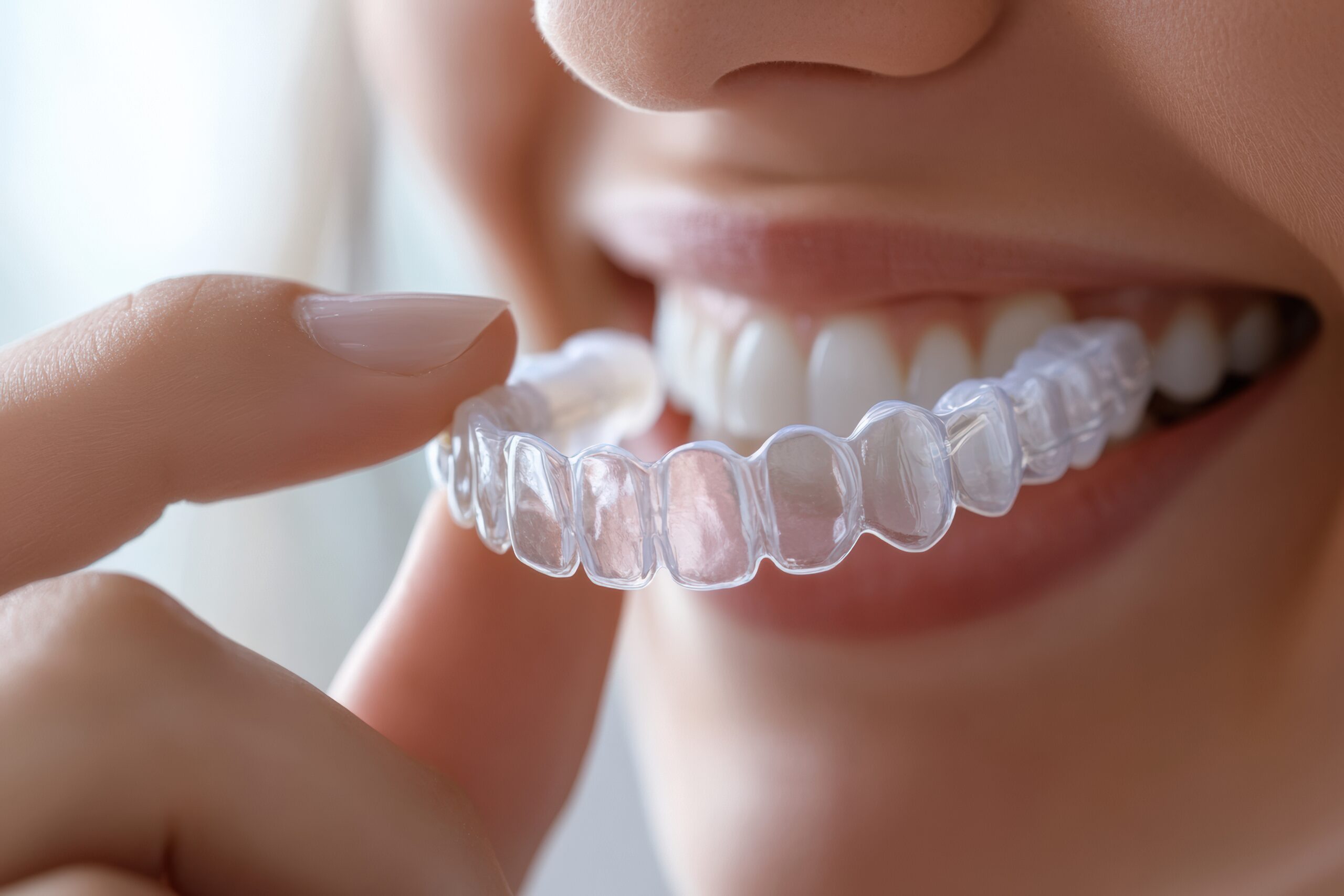
Many people dream of a perfectly straight smile, but the thought of traditional metal braces can be a deterrent, especially for adults and self-conscious teenagers. Fortunately, modern orthodontics offers a discreet and highly effective alternative: invisible braces, more commonly known as clear aligners. If you’re in Delhi and looking for a subtle way to straighten your teeth, understanding how clear aligners work can open the door to a more confident smile. At Dental Works Clinic in Paschim Vihar, Delhi, we provide detailed information to help you navigate your orthodontic options with clarity.
What are Invisible Braces / Clear Aligners?
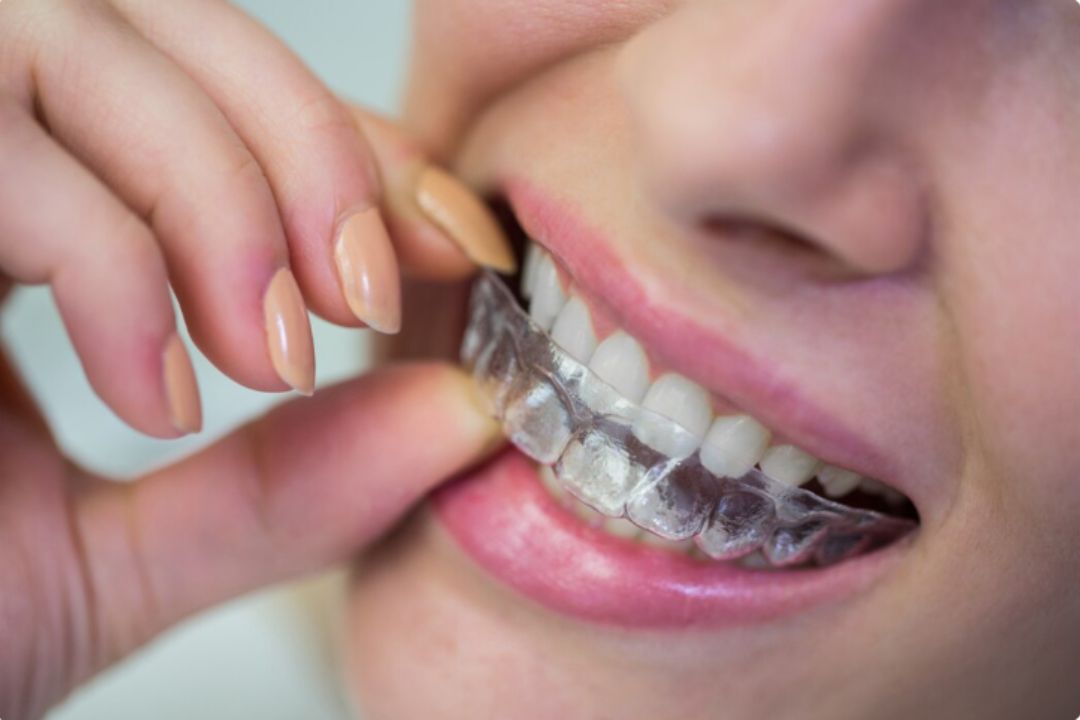
Clear aligners (transparent plastic trays that gently move teeth into better positions) are a revolutionary orthodontic treatment designed to straighten teeth without the use of traditional brackets and wires. Instead, they consist of a series of custom-made, virtually invisible plastic trays that fit snugly over your teeth. Each aligner in the series is designed to achieve a small, precise movement, gradually shifting your teeth into their desired positions.
Invisalign (a popular brand of clear aligners) is one of the most well-known and widely used clear aligner systems, often synonymous with the term “invisible braces.” While Invisalign is a leading brand, there are other reputable clear aligner options available that work on the same principle.
Common Dental Problems They Treat
Clear aligners are highly effective in correcting a wide range of orthodontic issues, from mild to moderate complexities. They can successfully address:
- Crowding (teeth overlapping due to lack of space): When there isn’t enough room in the jaw, teeth can become crooked or overlap. Clear aligners gently create space and align them.
- Spacing (gaps between teeth): Gaps can occur due to missing teeth or if the teeth are too small for the jaw. Aligners can effectively close these spaces.
- Overbite (upper front teeth excessively overlap lower teeth): This occurs when the upper teeth protrude too far over the lower teeth. Aligners can help adjust the bite.
- Underbite (lower front teeth protrude past upper front teeth): The opposite of an overbite, where the lower jaw extends forward.
- Crossbite (some upper teeth sit inside the lower teeth when biting down): This can affect one or multiple teeth and can lead to uneven wear.
- Open Bite (upper and lower front teeth don’t meet when the mouth is closed): This can make biting into certain foods difficult. Aligners can help bring the teeth into proper contact.
How Aligner Treatment Works Step-by-Step
The journey to a straighter smile with clear aligners is a carefully planned and executed process:
- Digital Scan (3D image of teeth): Your treatment begins with a comprehensive examination by your orthodontist. Instead of messy traditional impressions, a sophisticated intraoral scanner (a camera that takes 3D images inside the mouth) is used to create a precise digital 3D model of your teeth and gums.
- Treatment Planning Software (computer program that plans tooth movement): This digital model is then uploaded into specialized treatment planning software (a computer program that precisely plans each individual tooth movement from start to finish). Your orthodontist, using their expertise, will virtually map out the entire treatment, showing you a 3D simulation (a computer-generated preview) of how your teeth will move and what your final smile will look like.
- Series of Aligner Sets: Based on this precise plan, a custom series of clear aligners is manufactured just for you. Each aligner is slightly different from the last, designed to move your teeth incrementally.
- Wearing the Aligners: You will typically wear each set of aligners for 1–2 weeks (as instructed by your orthodontist) before moving on to the next set in the series.
- Importance of Compliance (wearing aligners 20–22 hours per day): This is perhaps the most crucial aspect of clear aligner treatment. For the aligners to work effectively, they must be worn for 20-22 hours per day, only removed for eating, drinking anything other than plain water, and oral hygiene. Inconsistent wear will prolong treatment time and may compromise results.
- Regular Check-ups: You’ll have periodic check-ups with your orthodontist, typically every 6-8 weeks, to monitor your progress and ensure your treatment is on track.
Clear Aligners vs. Traditional Metal Braces
For many, the choice between clear aligners and traditional braces comes down to a few key differences:
| Feature | Clear Aligners (e.g., Invisalign) | Traditional Metal Braces |
|---|---|---|
| Visibility | Virtually invisible. Most people won’t even notice you’re wearing them. | Highly visible metal brackets and wires. |
| Comfort | Smooth plastic trays, generally more comfortable with less irritation to cheeks and gums. | Metal brackets and wires can sometimes cause irritation or sores. |
| Cleaning | Removable, allowing normal brushing and flossing. Aligners are cleaned separately. | Brackets and wires make brushing and flossing more challenging and may require special tools. |
| Food Restrictions | No restrictions. Aligners can be removed while eating and drinking. | Many restrictions including sticky, hard, and crunchy foods. |
| Clinic Visits | Fewer and often shorter check-up appointments. | More frequent visits for wire and bracket adjustments. |
Treatment Duration, Follow-up, and Retention
The duration of clear aligner treatment varies greatly depending on the complexity of your case.
- Average Treatment Time: For most mild to moderate cases, treatment typically lasts anywhere from 6 to 18 months, though more complex cases can take longer. Your orthodontist will give you a precise estimate during your initial consultation.
- Retainers (custom devices worn after treatment to keep teeth in position): Once your active aligner treatment is complete, the most critical phase begins: retention. Your teeth have a natural tendency to shift back to their original positions. To prevent this, your orthodontist will prescribe retainers (custom devices, either removable or fixed, worn after treatment to keep teeth in their newly straightened position). Wearing your retainers as instructed is absolutely essential for maintaining your beautiful new smile long-term.
- Follow-up: Regular follow-up appointments, even after treatment, are important to ensure your retainers are working effectively and your bite remains stable.
Who Is , and Isn’t , a Good Candidate?
Clear aligners are a fantastic solution for a broad spectrum of patients, especially those concerned about aesthetics. They are ideal for:
- Adults and teens with mild to moderate crowding (teeth overlapping), spacing (gaps), and common bite issues like overbite, underbite, crossbite, and open bite.
- Patients who are committed to wearing their aligners consistently (high compliance).
However, clear aligners may not be the best solution for:
- Very young children whose teeth and jaws are still developing.
- Individuals with very complex skeletal (bone-related) problems (severe discrepancies in jaw size or position) that may require traditional fixed braces or even orthognathic surgery (jaw surgery to correct severe bone discrepancies) for optimal results.
- Patients who may struggle with the discipline of wearing aligners for 20-22 hours a day.
Your orthodontist will assess your unique orthodontic needs and determine if clear aligners are the most appropriate and effective treatment path for you.
How a Specialist Clinic Plans Clear Aligner Treatment
At Dental Works Clinic in Paschim Vihar, Delhi, our approach to clear aligner therapy is rooted in precision, personalization, and advanced technology.
- We utilize digital impressions (3D scans of your teeth) to ensure extreme accuracy in your treatment plan, eliminating the discomfort of traditional moulds.
- Our experienced orthodontists meticulously plan each tooth movement using 3D simulations (computer-generated previews), allowing you to visualize your entire treatment journey and final results before even starting.
- We ensure regular reviews (periodic check-ups) to track your progress, address any concerns, and make necessary adjustments to your treatment plan, ensuring your teeth move efficiently and predictably towards your ideal smile.
Invisible braces and Invisalign offer a discreet, comfortable, and effective way to achieve a straighter smile. If you’re considering this modern orthodontic solution in Delhi, the best first step is to consult an orthodontist (a specialist dentist for teeth and jaw alignment). They can provide a thorough assessment of your smile, discuss whether clear aligners are right for you, and guide you through the process of achieving the healthy, beautiful smile you deserve.


Leave A Comment