


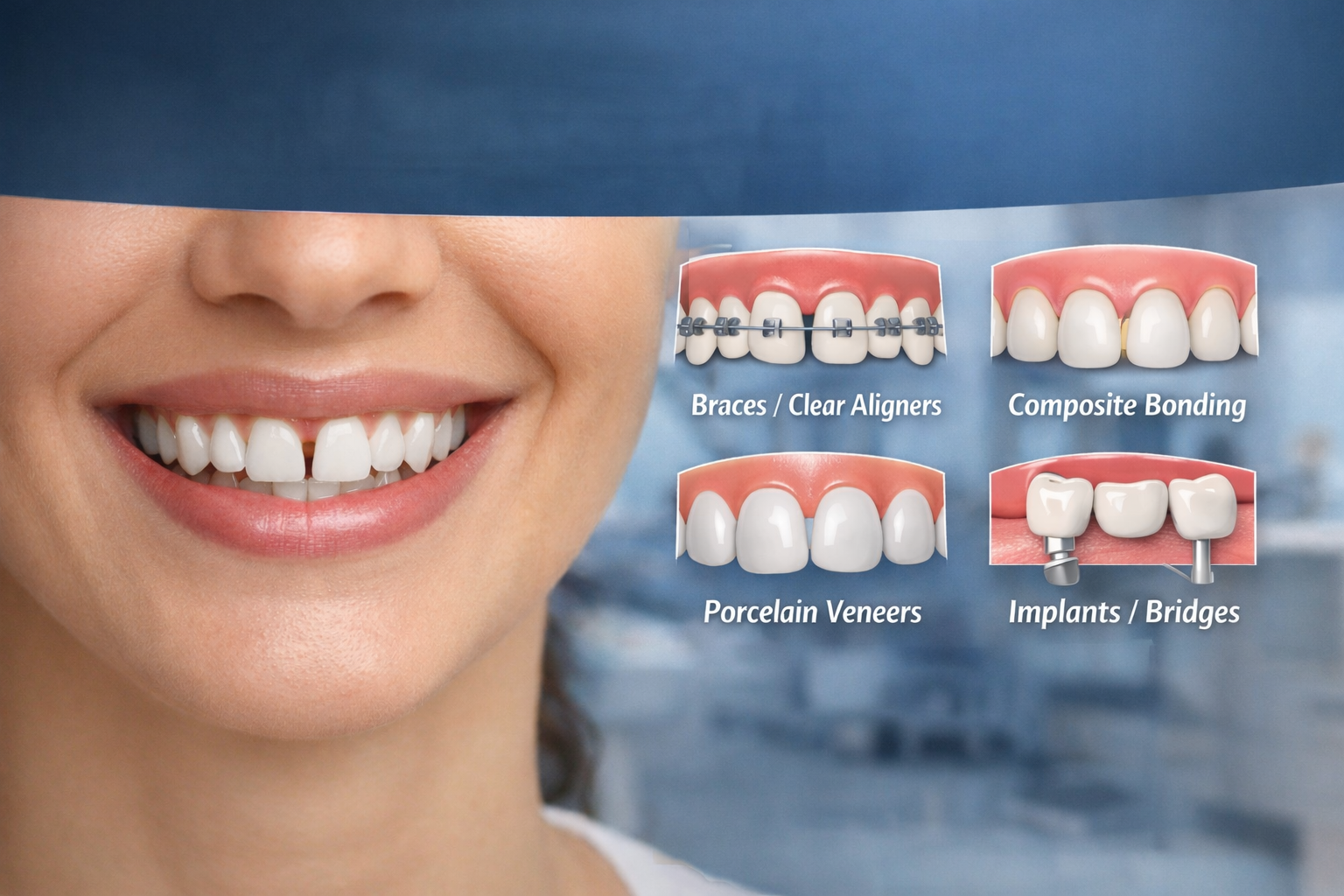
Replacement of a missing tooth is a fundamental aspect of restorative dentistry, with implications for mastication, phonetics, esthetics, and occlusal stability. Conventional treatment modalities include removable partial dentures, conventional fixed partial dentures, and dental implants. While each option has established indications, not all patients are suitable candidates for more invasive or surgically based procedures.
The Maryland bridge was introduced as a conservative alternative to conventional full-coverage fixed partial dentures. Its defining feature is the use of metal or ceramic retainers bonded to the lingual or palatal surfaces of adjacent abutment teeth, thereby minimizing the need for extensive tooth preparation. This approach aligns with contemporary principles of minimally invasive dentistry and biologic preservation.
Historical Development and Concept
The original Maryland bridge was developed at the University of Maryland School of Dentistry in the 1970s. Early designs utilized perforated or etched metal frameworks that were bonded to enamel using resin cements. The concept relied on micromechanical retention and adhesive bonding rather than full-coverage crown preparations.
Over time, improvements in enamel etching protocols, resin cement chemistry, and surface treatment techniques have enhanced the bond strength and clinical predictability of resin-bonded prostheses. Modern Maryland bridges may incorporate base metal alloys, noble metal alloys with surface treatment, or high-strength ceramics such as zirconia and lithium disilicate.
Biomechanical Principles
The success of a Maryland bridge is primarily dependent on adhesive bonding to enamel. Enamel provides a predictable and durable bonding substrate compared to dentin or restorative materials. Therefore, case selection and tooth preparation are critical.
Key biomechanical principles include:
-
Maximization of enamel surface area for bonding
-
Avoidance of heavy occlusal contacts on the pontic and retainers
-
Favorable abutment tooth alignment
-
Control of shear and tensile forces at the resin interface
Because the retainers are thin and bonded rather than cemented conventionally, the prosthesis is more susceptible to debonding under unfavorable occlusal loading or parafunctional habits.
Indications and Case Selection
Maryland bridges are best suited for carefully selected clinical scenarios. Common indications include:
-
Replacement of a single missing anterior tooth
-
Young patients where implant placement is contraindicated due to incomplete skeletal growth
-
Patients seeking a non-surgical, conservative option
-
Temporary or interim prosthetic replacement prior to implant therapy
-
Patients with intact, unrestored abutment teeth
They are particularly useful in the replacement of maxillary lateral incisors, where occlusal forces are relatively lower and esthetic demands are high.
Contraindications include:
-
Patients with bruxism or heavy occlusal forces
-
Multiple missing teeth requiring long-span prostheses
-
Heavily restored or carious abutment teeth
-
Insufficient enamel surface for reliable bonding
-
Deep overbites with significant incisal contact on retainers
Tooth Preparation Design
One of the advantages of the Maryland bridge is the minimal preparation required. However, preparation is not entirely eliminated. Conservative enamel reduction may be performed to create space for the retainer and improve seating and path of insertion.
Preparation features may include:
-
Minimal lingual or palatal reduction
-
Proximal grooves for enhanced resistance form
-
Occlusal rest seats in selected cases
-
Supragingival margins to preserve periodontal health
The goal is to maintain enamel while improving mechanical stability and resistance to dislodging forces.
Materials and Laboratory Considerations
Early Maryland bridges were fabricated using nickel-chromium or cobalt-chromium alloys due to their ability to be electrolytically etched, creating micromechanical retention. Modern alternatives include:
-
Zirconia-based resin-bonded bridges
-
Lithium disilicate ceramic frameworks
-
Treated noble metal alloys
Zirconia offers improved esthetics and biocompatibility, but its bonding requires specialized surface treatment such as air abrasion and the use of phosphate monomer-containing resin cements. Ceramic Maryland bridges may reduce metal show-through, particularly in thin enamel or highly esthetic zones.
Laboratory design must ensure:
-
Thin yet rigid retainers
-
Proper pontic contour and emergence profile
-
Passive fit to minimize internal stresses
-
Surface treatments compatible with adhesive systems
Cementation Protocol
Successful cementation is a critical determinant of long-term retention. A typical protocol involves:
-
Thorough enamel etching with phosphoric acid
-
Application of a compatible adhesive system
-
Surface treatment of the retainer framework
-
Use of dual-cure or light-cure resin cement
-
Strict moisture control with rubber dam or isolation techniques
Any compromise in isolation or surface preparation can significantly reduce bond strength and increase the risk of debonding.
Advantages of the Maryland Bridge
From a clinical and patient-centered perspective, Maryland bridges offer several advantages:
-
Preservation of natural tooth structure
-
Reduced chairside preparation time
-
Lower biological cost compared to full-coverage bridges
-
No surgical intervention
-
Reversibility, allowing for future treatment options
-
Lower overall cost compared to implant therapy
These factors make Maryland bridges particularly appealing in young patients and in cases where conservative management is prioritized.
Limitations and Complications
Despite improvements in materials and bonding, Maryland bridges are not without limitations. The most commonly reported complication is debonding. While debonding does not typically damage abutment teeth, it can result in patient inconvenience and the need for recementation or redesign.
Other potential issues include:
-
Esthetic concerns due to metal show-through
-
Limited ability to modify abutment tooth color or shape
-
Occlusal wear or interference
-
Reduced longevity compared to implant-supported restorations
Long-term studies suggest variable survival rates, often ranging from 70 to 90 percent over 5 to 10 years, depending on case selection, materials, and operator technique.
Comparison With Other Treatment Modalities
When compared with conventional fixed partial dentures, Maryland bridges offer superior tooth preservation but lower mechanical retention. Compared with dental implants, they offer a non-surgical and cost-effective alternative, though with potentially reduced longevity.
From a biologic standpoint, the Maryland bridge aligns closely with the principles of minimally invasive dentistry. It allows for functional and esthetic replacement while preserving future treatment options.
Conclusion
The Maryland bridge remains a valuable and clinically relevant option for single-tooth replacement in appropriately selected patients. Advances in adhesive dentistry and restorative materials have improved its predictability and expanded its indications. When designed and cemented following sound biomechanical and adhesive principles, the Maryland bridge can provide a conservative, functional, and esthetic solution.
From a clinician’s perspective, the Maryland bridge should be viewed not as a compromise, but as a biologically respectful treatment modality that occupies an important position in the modern restorative armamentarium. Careful case selection, meticulous technique, and patient education remain essential for achieving favorable long-term outcomes.


Leave A Comment