

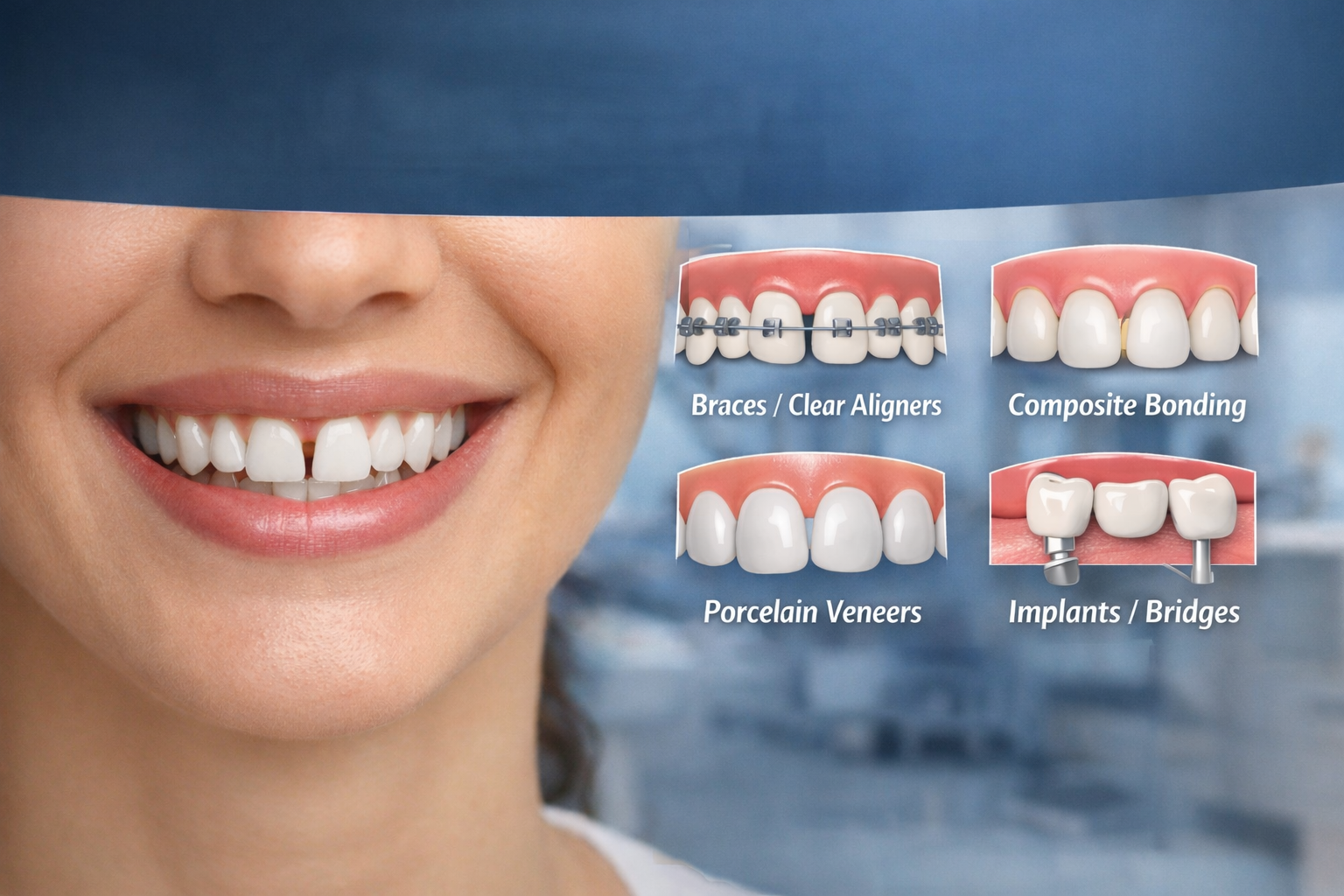
A gap between teeth, most commonly a space between the upper front incisors, is called a diastema. It can be a normal stage in childhood development or continue into adulthood due to tooth size mismatch, missing or undersized teeth, an enlarged labial frenum, gum disease, oral habits such as thumb sucking or tongue thrusting, or alignment issues. Teeth gap treatment should always be personalized. Cosmetic concerns, function, gum health, and the underlying cause all influence the treatment plan.
How Dentists Diagnose Teeth Gaps
A dentist begins with a detailed clinical examination, photographs, and a periodontal assessment to check gum health. Dental X rays may be taken to evaluate bone levels, tooth roots, and any missing or impacted teeth. In some cases, tooth size analysis is done to determine whether the gap is caused by small teeth, large jaw space, or improper positioning. If gum disease or infection is present, it must be treated first to ensure long term success.
Treatment Options for Teeth Gap
1. Orthodontic Treatment
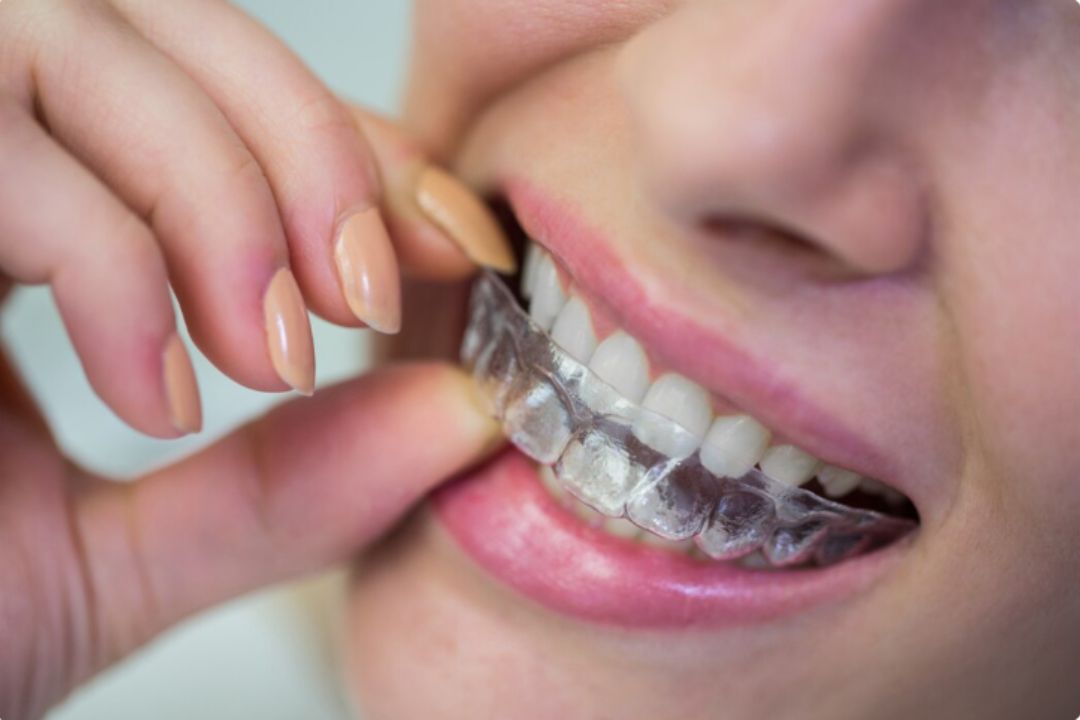
Braces and clear aligners are among the most effective solutions for closing gaps caused by tooth positioning or spacing issues. Orthodontic treatment gradually moves teeth into proper alignment using controlled force. Clear aligners are popular for adults due to their aesthetic appeal and comfort.
Research shows orthodontic closure is highly effective, but retention is essential. Without retainers, there is a risk of relapse, where the gap may reopen over time. Long term retention plans are critical for maintaining results.
2. Composite Bonding
Composite bonding is a minimally invasive cosmetic procedure where tooth colored resin is applied to reshape teeth and close gaps. It is often completed in a single visit and offers immediate aesthetic improvement.
Clinical studies indicate composite bonding provides excellent short term results with minimal enamel removal. However, it may require maintenance over time due to staining or wear.
3. Porcelain Veneers
Porcelain veneers are thin ceramic shells bonded to the front surface of teeth. They are suitable for patients who want to correct gaps along with discoloration or shape irregularities.
Research suggests porcelain veneers have strong long term durability and stain resistance compared to composite materials. They require some enamel preparation and involve a higher cost, but they offer predictable aesthetic outcomes.
4. Frenectomy
If an oversized labial frenum is the cause of the gap, a minor surgical procedure called frenectomy may be recommended. This procedure removes or reshapes the tissue responsible for pulling the teeth apart. It is often combined with orthodontic treatment to ensure stable results.
Evidence indicates that proper case selection and timing improve long term stability after frenectomy.
5. Dental Implants or Bridges
When a gap exists due to a missing tooth, restorative solutions such as dental implants or bridges may be required. Dental implants replace both the tooth root and crown, helping maintain bone structure. Bridges use adjacent teeth for support.
The choice depends on bone health, overall oral condition, and patient preference.
Avoid DIY Gap Closing Methods
It is important to avoid home remedies such as using rubber bands to close gaps. Dental research has documented cases of severe gum damage, bone loss, and even tooth loss from unsupervised attempts. Orthodontic treatment should always be performed under professional supervision.
Conclusion
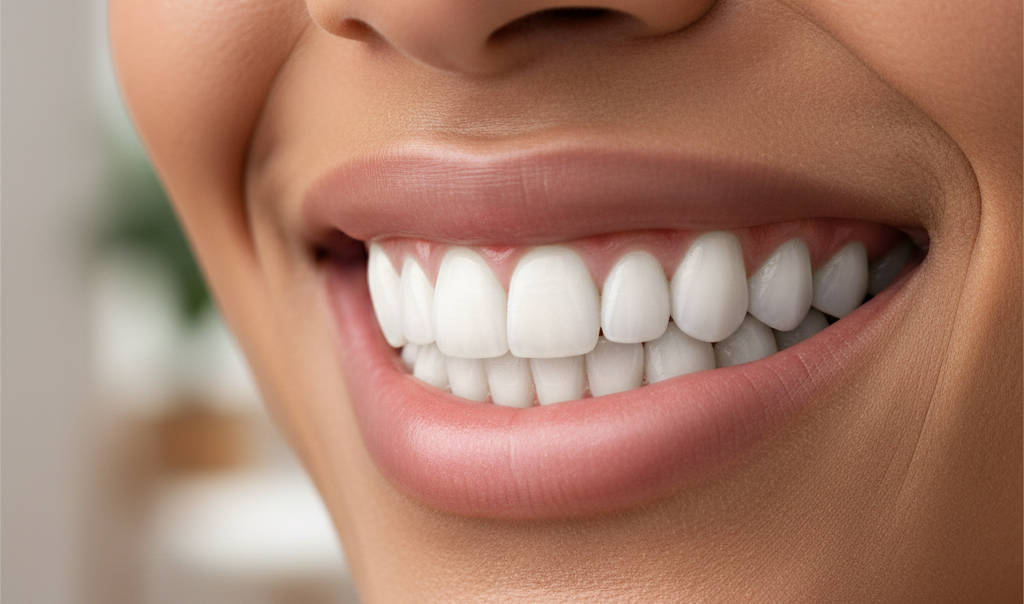
Teeth gap treatment depends on the cause, size of the gap, patient age, aesthetic goals, and oral health status. Options range from orthodontic correction to cosmetic bonding or veneers, and in some cases minor surgical procedures or implants. A comprehensive dental evaluation ensures the most effective and stable outcome.
Consulting a qualified dentist or orthodontist is the first step toward achieving a confident and healthy smile.




Leave A Comment